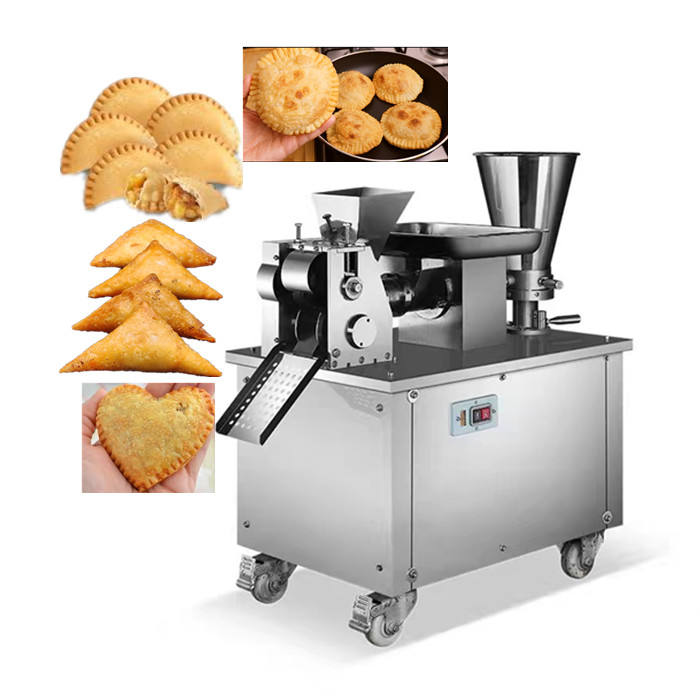


4500 Pcs/H Automatic Dumpling & Samosa Making Machine
Product Overview
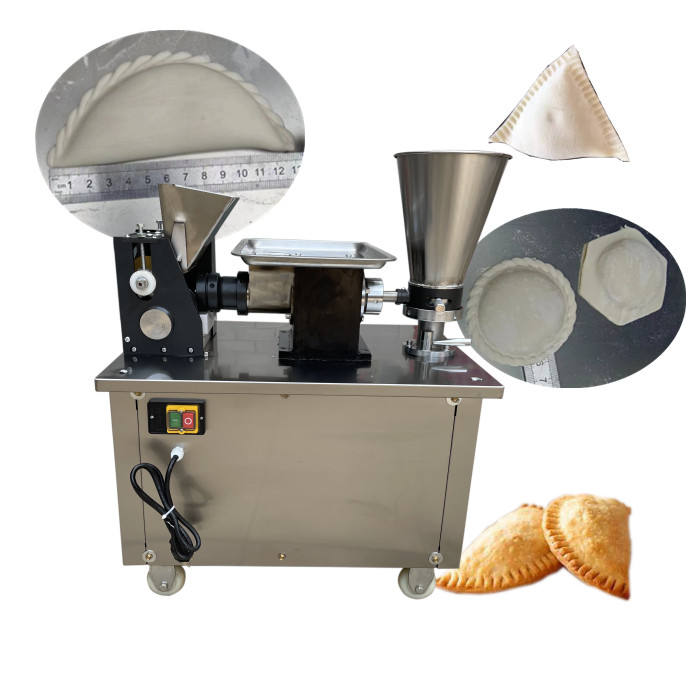
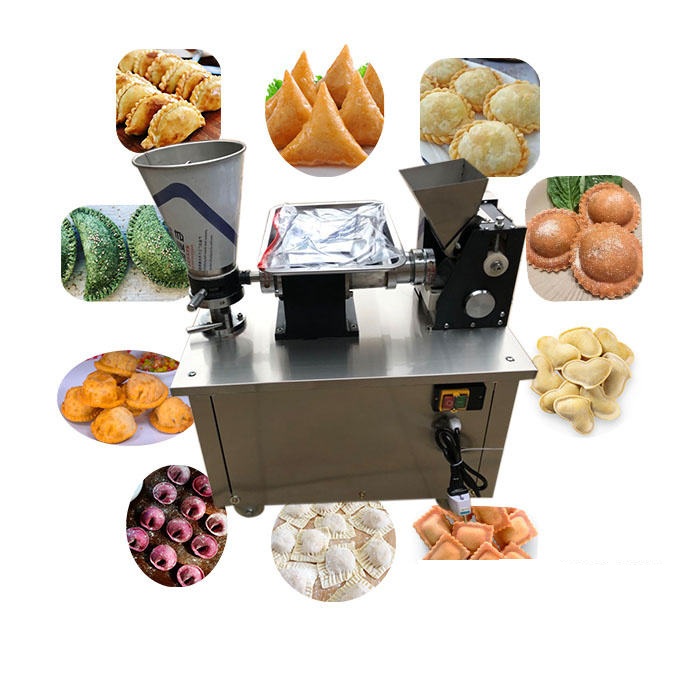
The Automatic Dumpling and Samosa Maker Machine is a high-efficiency food production solution designed for commercial kitchens and food manufacturing businesses. Built with food-grade stainless steel and powered by a strong industrial motor, it delivers fast, hygienic, and consistent production of dumplings, samosas, empanadas, pierogi, and similar filled snacks.
With a production capacity of up to 4500 pieces per hour, this machine significantly reduces labor costs while improving output consistency and production speed.
Key Features
- High Production Capacity (4500 pcs/hour) – Ideal for large-scale commercial food production
- Multifunctional Use – Produces dumplings, samosas, empanadas, pierogi, and more
- Food-Grade Stainless Steel Construction – Ensures hygiene, safety, and durability
- Fully Automatic Operation – Reduces manual labor and increases efficiency
- Compact Industrial Design – Space-saving structure suitable for factories and kitchens
- Stable Motor Performance – Ensures continuous and reliable operation
- Easy to Operate & Clean – User-friendly system with minimal training required
Specifications
| Attribute | Details |
|---|---|
| Production Capacity | 4500 pieces/hour |
| Machine Type | Automatic Dumpling & Samosa Maker |
| Material | Food-grade stainless steel |
| Power | 1500W |
| Voltage | 110V / 220V |
| Dimensions | 650 × 450 × 800 mm |
| Weight | 120 kg |
| Operation Mode | Fully automatic |
| Core Components | Industrial motor |
| Certification | CE certified |
Applications
- Dumpling manufacturing factories
- Samosa and snack production plants
- Restaurants and large catering services
- Frozen food production units
- Commercial food processing businesses
Conclusion
The 4500 Pcs/H Automatic Dumpling & Samosa Maker Machine is a powerful and efficient solution for high-volume food production. With its automatic operation, stainless steel build, and versatile output capabilities, it is ideal for businesses looking to increase productivity, maintain hygiene standards, and reduce operational costs.
Related products

Food & Beverage Machinery


Food & Beverage Machinery
CGF24‑24‑8 Fully Automatic 3‑in‑1 Mineral Water Bottling Machine